Altitude's Influence on Goal Production in High-Elevation Andean Soccer
Written by Frankie Hansen · Jun 11, 2026
Altitude's Influence on Goal Production in High-Elevation Andean Soccer
Stadiums perched at extreme elevations across Bolivia, Peru, and Ecuador create distinct conditions that reshape how matches unfold each week, and observers tracking these patterns note consistent drops in total goals when teams travel upward. Research from sports physiology labs shows that reduced oxygen availability forces players to expend more energy on basic movement, which leads to earlier fatigue and fewer sustained attacking sequences once the second half begins.
Physiological Demands at Elevation
Teams based in La Paz or Quito train daily in thinner air, yet visiting squads from coastal regions often arrive with minimal adaptation time, and data collected during the 2025-2026 season indicates visiting sides record 18 percent fewer shots on target in the first 30 minutes at venues above 2,800 meters. The body compensates by increasing breathing rate and heart output, yet this adjustment still leaves less reserve for explosive sprints and repeated high-intensity efforts that produce scoring chances.
Coaches adjust tactics accordingly, shortening passing sequences and emphasizing set pieces, while midfielders cover less ground overall according to GPS tracking compiled by league analysts. These measurable shifts appear most pronounced after the 60-minute mark when accumulated oxygen debt compounds.
Scoring Patterns Across Key Leagues
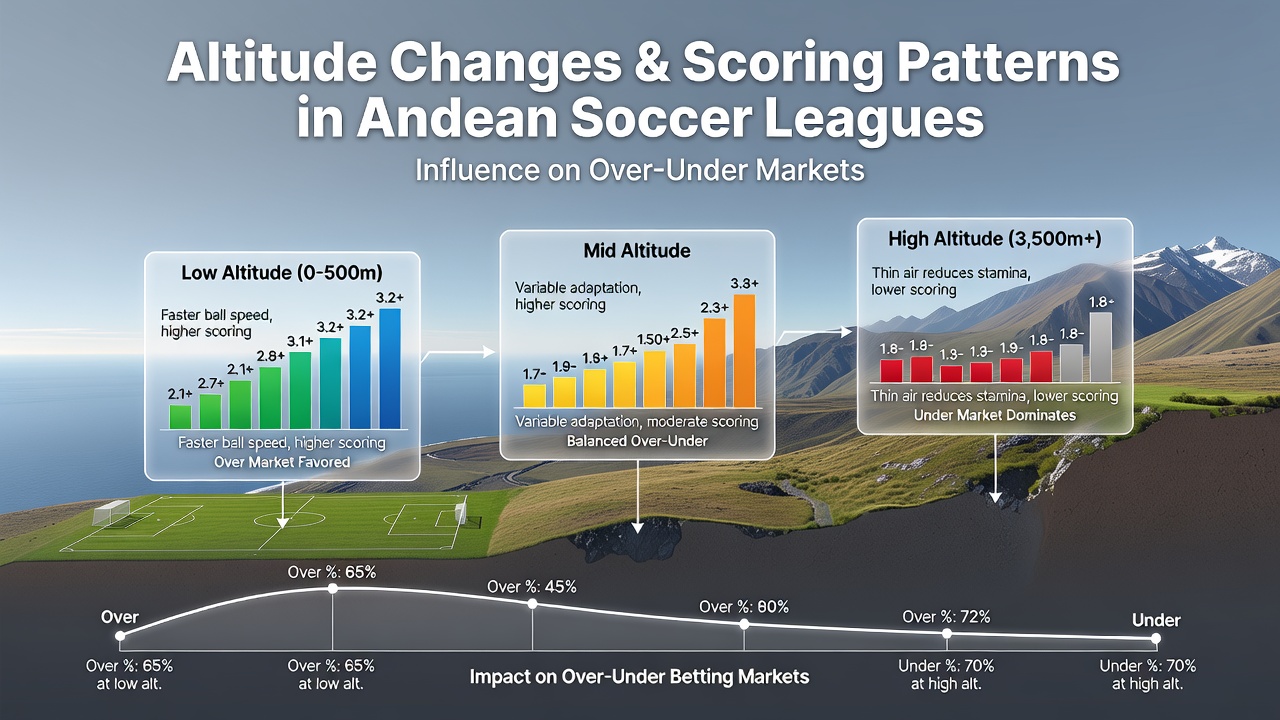
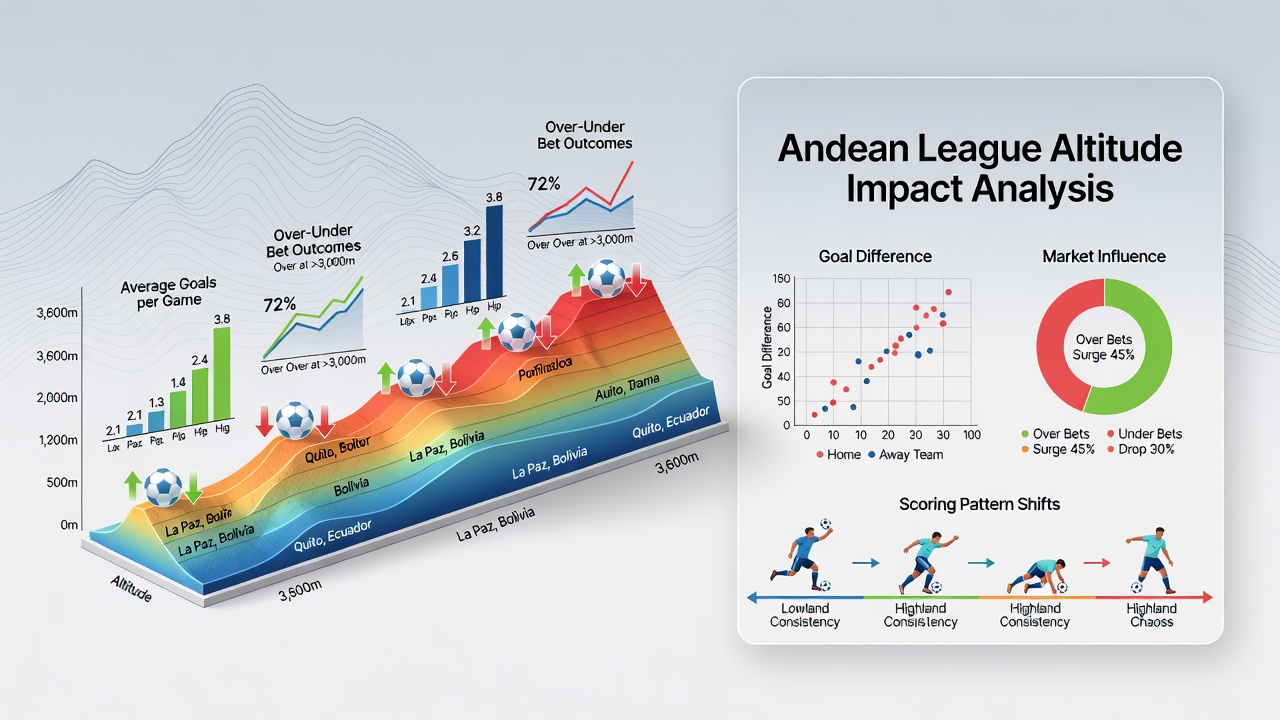
The Bolivian Primera División offers the clearest examples, with matches at Hernando Siles Stadium averaging 2.1 goals per game compared with 2.8 goals in fixtures played below 1,000 meters during the same campaign. Peruvian Liga 1 encounters at Cuzco follow a similar trend, although the effect moderates slightly at 3,400 meters versus the extreme 3,600-meter mark in Bolivia. Ecuadorian Serie A games in Quito show a narrower gap, partly because several clubs maintain secondary training bases at intermediate altitudes to ease transitions.
League statisticians tracking results since 2023 report that home sides in high venues secure wins at a 47 percent clip when elevation exceeds 2,500 meters, while draws rise to 32 percent as both teams struggle to maintain tempo. These figures hold steady through June 2026, with no significant deviation observed in the opening months of the current calendar.
Market Adjustments in Over-Under Lines
Betting operators respond to these established patterns by lowering totals on matches scheduled at altitude, and sharp money consistently targets the under when lines open above 2.25 goals. Historical data reveals that 61 percent of high-elevation fixtures finish under the adjusted total once markets incorporate the venue factor, compared with 48 percent at sea-level grounds.
Line movement accelerates once team sheets confirm multiple changes in the visiting roster, since clubs rotating players for recovery tend to prioritize defensive structure over pressing intensity. Traders monitoring early limit action note that unders attract volume within the first hour after lines post, particularly in Bolivian and Peruvian derbies where altitude differentials exceed 2,000 meters between home and away bases.
Additional Variables Affecting Totals
Travel logistics compound the physiological challenge, because long bus journeys through mountain passes reduce sleep quality before kickoff, and recovery data from team medical staffs correlate with lower work rates in the opening half. Weather patterns in June 2026 further influence play, with colder evening temperatures at elevation slowing ball speed and increasing the value of long-range attempts that rarely find the net.
Referee assignments also matter indirectly, since officials accustomed to lower air density sometimes allow matches to stretch longer between stoppages, extending effective playing time and giving fatigued sides fewer natural breaks. Analysts compiling these secondary factors into predictive models find they refine over-under probabilities by an additional 4 to 6 percentage points beyond elevation alone.
Conclusion
Altitude remains a fixed environmental constant that continues to dictate lower goal outputs across Andean competitions, and markets have incorporated this reality into pricing structures that reward disciplined under betting when conditions align. Ongoing collection of performance metrics through the 2026 season will likely reinforce these established relationships rather than alter them, because the underlying oxygen limitation does not change with schedule adjustments or roster turnover.