European Turf Variations: How Surface Changes Influence Thoroughbred Victory Rates
Written by Blake Schulz · Jun 21, 2026
European Turf Variations: How Surface Changes Influence Thoroughbred Victory Rates
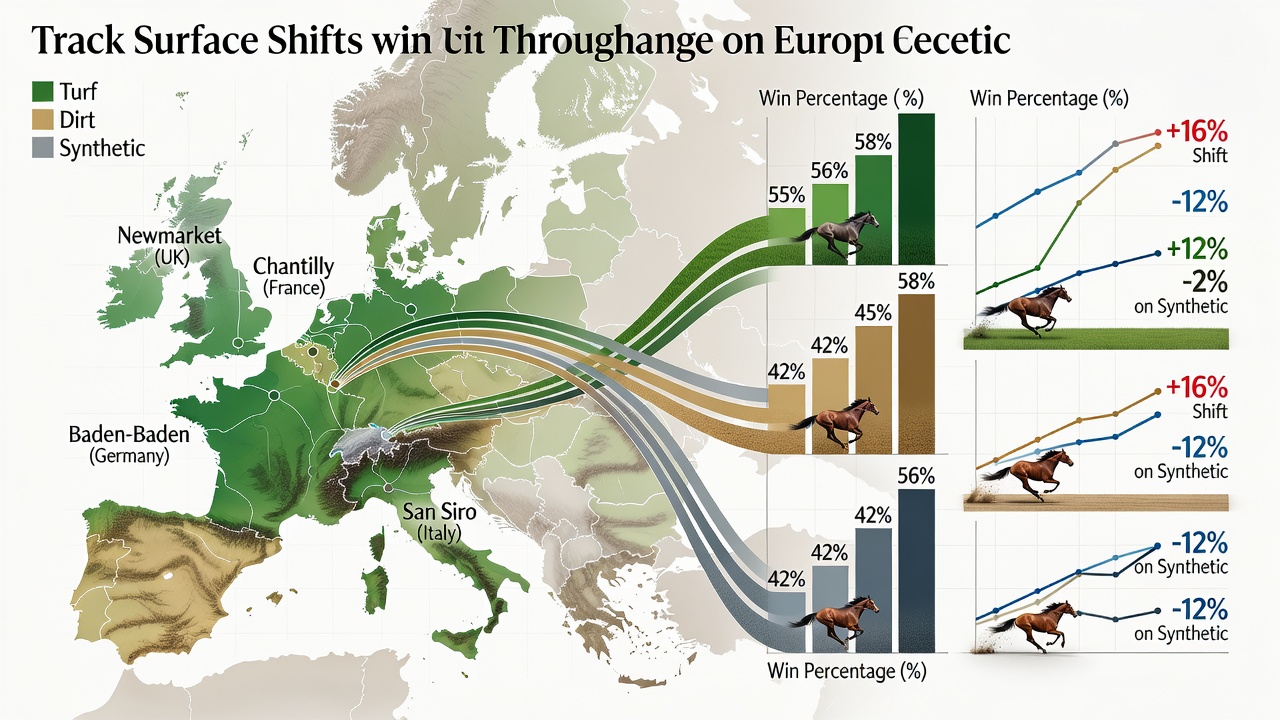
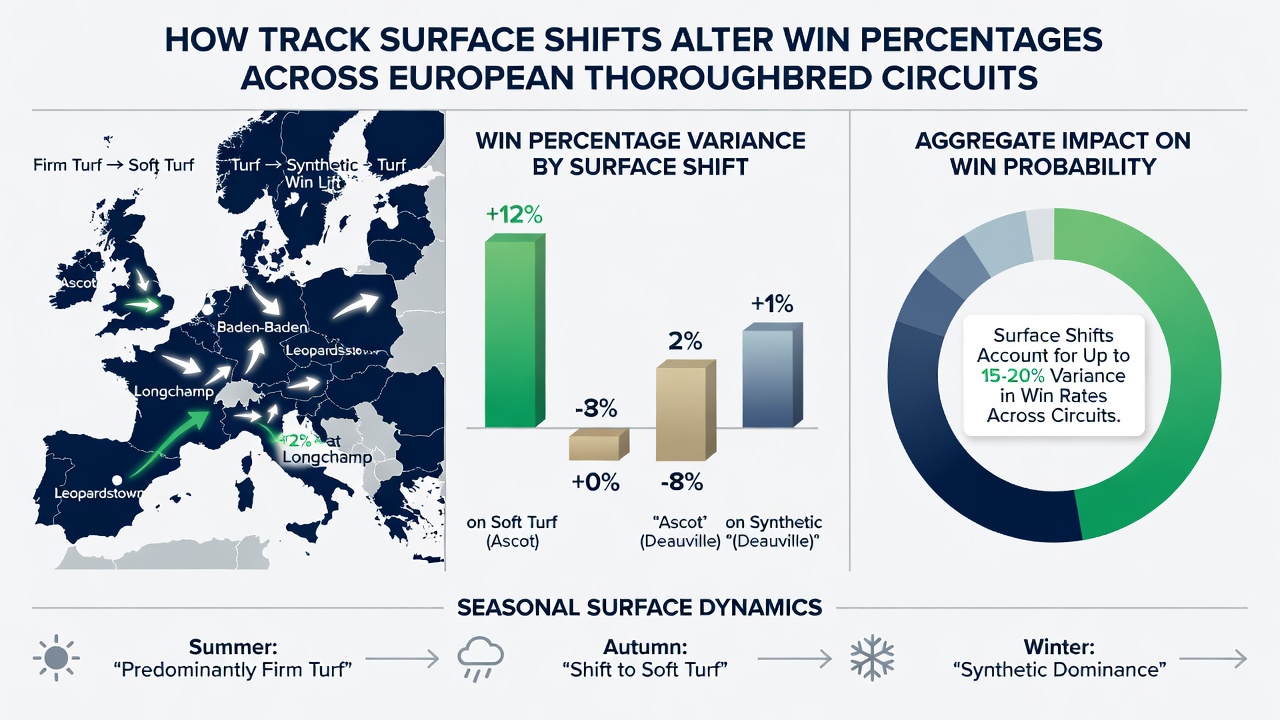
Track surfaces across European thoroughbred circuits range from traditional turf at venues like Longchamp and the Curragh to synthetic all-weather options at places such as Lingfield and Chantilly, and these differences create measurable shifts in win percentages for horses, trainers, and jockeys. Data compiled over multiple seasons shows that horses with proven turf records often see their success rates drop by 8 to 12 percent when switched to polytrack or tapeta surfaces, while specialists on artificial tracks reverse that pattern on grass. European racing authorities track these statistics closely because surface transitions happen frequently during the spring and autumn campaigns when weather patterns force schedule adjustments.
Core Surface Types and Their Performance Profiles
European circuits rely primarily on turf that varies from firm to heavy depending on rainfall, yet all-weather tracks provide consistent footing year-round and studies from equine research centers indicate that favorites win at higher rates on synthetic surfaces because the ground does not soften unpredictably. Observers note that on turf, especially when it turns soft after heavy rain, long-striding horses lose ground while those with quick acceleration maintain better percentages, and this pattern repeats across circuits from Ireland through France and into Germany. All-weather tracks meanwhile favor horses that handle the kickback and maintain rhythm, which leads to different trainer success rates when compared directly with turf results.
Researchers at institutions focused on equine biomechanics have documented how stride length and impact forces change between surfaces, and these biomechanical shifts translate into altered win percentages when horses cross from one type to another during the same meet. Trainers who prepare runners for multiple surfaces build specific conditioning programs that account for the extra stress on joints during transitions, and data from major meetings confirms that such preparation correlates with steadier performance figures.
Regional Circuit Differences Across the Continent
Irish tracks tend toward softer turf throughout much of the year, which produces win-rate advantages for locally trained stayers, whereas French circuits often present firmer ground that rewards speed and early positioning. German venues introduce a mix that includes some of the continent's few dirt options alongside turf, and horses traveling between these regions show win-percentage fluctuations of up to 15 percent depending on the surface match. Those who've studied cross-border patterns find that horses returning from all-weather campaigns in Britain to Irish turf meetings require several weeks to regain peak figures.
June 2026 meetings at Royal Ascot and the Grand Prix de Paris highlighted these surface effects once more, with several high-profile runners posting lower than expected results after recent switches between turf and synthetic tracks. Handicappers adjust ratings accordingly, and the resulting line movements reflect accumulated data rather than speculation.
Data Patterns and Statistical Edges
Comprehensive records maintained by racing federations reveal that trainers with access to both turf and all-weather facilities achieve more consistent win percentages across the board because they can select suitable runners for each meeting. Jockeys also adapt their tactics, riding more patiently on turf where ground can give way and more aggressively on synthetics where the surface remains uniform. One study released by a leading European equine university tracked over 12,000 runners and found that surface specialists outperform generalists by margins that grow larger at higher class levels.
Those analyzing seasonal data note that early summer campaigns, when many tracks transition from winter synthetics back to summer turf, produce the clearest examples of altered win rates. Horses that dominated all-weather fixtures in February and March frequently post reduced figures in their first few turf starts until they reacclimate, and this adjustment period appears consistently in the statistics.
Trainer and Jockey Adaptations to Surface Shifts
Successful European stables maintain detailed logs of each horse's surface preferences and use that information to target appropriate races, which leads to measurable improvements in overall strike rates. Jockeys who ride across multiple countries develop an intuitive sense for how different surfaces affect pace and positioning, and their booking patterns often align with these surface-specific strengths. Data from major circuits shows that certain rider-trainer combinations post elevated win percentages when restricted to their preferred surface types.
Travel between circuits adds another layer because horses must also adjust to new track configurations and rail placements that interact with surface conditions. European authorities continue to monitor these variables through centralized databases that allow direct comparison of performance metrics across borders.
Conclusion
Surface shifts remain a central variable in European thoroughbred racing because they directly influence win percentages in ways that data consistently captures. Circuits that offer multiple surface options provide trainers and owners with strategic choices, while those limited to turf face greater variability tied to weather. Continued collection of performance statistics across all major venues supports more accurate assessments of how each horse responds to ground conditions, and this information shapes race planning throughout the season.