Fixture Congestion Shifts Accumulator Results in Europe's Leading Basketball Leagues
Written by Frankie Hansen · Aug 13, 2026
Fixture Congestion Shifts Accumulator Results in Europe's Leading Basketball Leagues
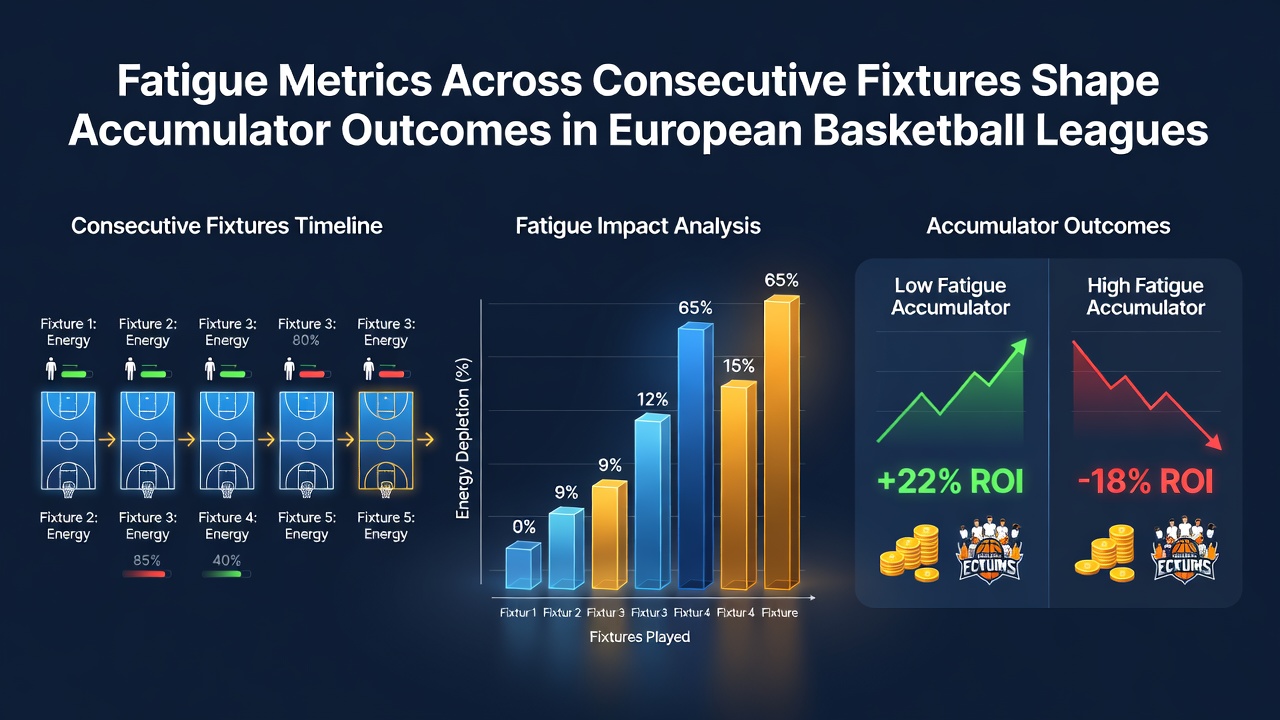
European basketball schedules pack multiple games into short windows, and performance metrics reveal measurable drops when teams face consecutive fixtures without adequate rest. Data from the EuroLeague and domestic competitions such as Spain's Liga ACB and Germany's Basketball Bundesliga show declines in shooting accuracy, defensive efficiency, and rebounding rates after back-to-back contests. These patterns influence accumulator construction because bettors who track fatigue indicators adjust selections toward underdogs or lower totals in later legs.
Performance Data Across Dense Calendars
League tracking systems record player workload through minutes played, distance covered, and heart-rate zones, while clubs publish aggregated figures that researchers cross-reference with game outcomes. Studies conducted during the 2025-2026 campaign indicated teams playing three games in five days posted field-goal percentages 4.2 points lower than season averages and allowed opponents 6.8 additional points per contest. Observers note similar trends in the EuroCup, where squads traveling between countries often see turnover rates climb after the second fixture in a short span.
August 2026 marks the start of pre-season tournaments across the continent, with several clubs already testing condensed schedules that mirror regular-season congestion. Early returns from friendly events in Spain and Italy suggest the same efficiency losses appear even before the official campaign begins, giving analysts an initial dataset for accumulator modeling.
Accumulator Construction and Rest Metrics
Bettors building multi-leg wagers examine rest differentials between opponents rather than relying solely on overall team rankings. When one side enjoys two full days between games while the other plays on consecutive nights, historical results favor the rested squad in point-spread markets. Figures compiled by European sports analytics firms show accumulator hit rates improve when at least two legs incorporate rest-advantage selections, whereas chains built without this filter post lower success percentages over large sample sizes.
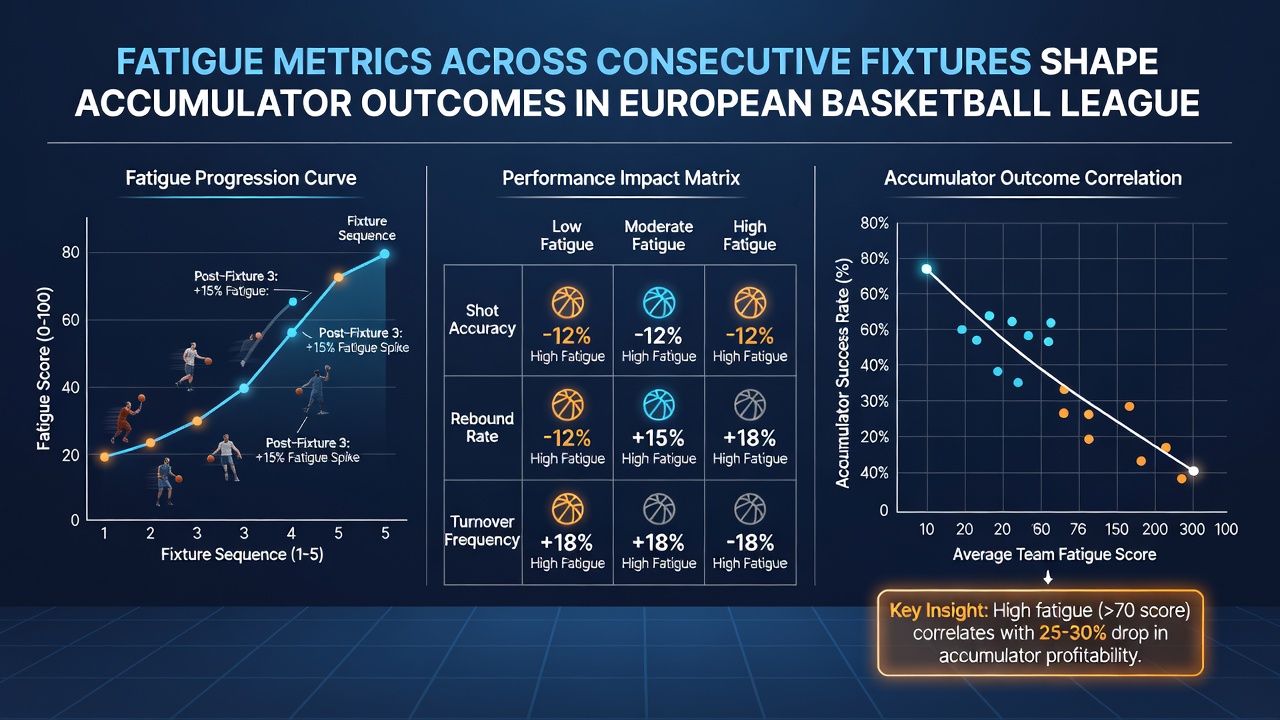
Coaches adjust rotations during congested periods, which further alters individual player props inside accumulators. Minutes restrictions for key scorers reduce expected points and assists, prompting bettors to pivot toward bench-player overs or team-total unders. Data from the 2024-2025 EuroLeague season demonstrated that teams on the second night of back-to-backs hit season-low scoring marks in 38 percent of those contests, a rate that directly affects over/under legs in multi-bet slips.
Travel and Recovery Patterns
Cross-border travel compounds fatigue beyond simple game density. Flights from northern to southern Europe, combined with time-zone shifts, correlate with elevated foul rates and reduced three-point accuracy on the following evening. League reports compiled through 2026 indicate that teams logging more than 800 kilometers between games show an additional 2.1 percent drop in effective field-goal percentage compared with shorter trips. Accumulator strategies that layer travel distance alongside rest differentials produce more stable outcomes across sample periods.
Medical staff monitor recovery through sleep tracking and muscle-readiness scores, yet public data releases remain limited. Still, aggregated league statistics allow external analysts to identify patterns without accessing private club information. Researchers at several European universities have published papers linking these workload spikes to higher injury incidence in subsequent weeks, information that indirectly shapes long-term accumulator planning.
Market Adjustments and Data Integration
Oddsmakers incorporate fatigue signals into opening lines, yet sharp bettors who apply granular metrics often find residual value in later legs of accumulators. When public perception overweights recent form without accounting for schedule density, lines on totals and spreads drift toward the fatigued side. Historical line-movement records from major European operators reveal that totals drop an average of 3.4 points between open and close on second-night games, reflecting late money aligned with workload data.
Those constructing accumulators now blend official league statistics with third-party tracking tools that quantify player load. The approach yields selections grounded in measurable declines rather than narrative assumptions about motivation or style matchups. As August 2026 approaches and clubs release updated schedules, early identification of congestion clusters offers a window for refined multi-leg construction before markets fully adjust.
Conclusion
Fixture density, travel demands, and recovery windows produce consistent statistical shifts that accumulator builders can quantify across Europe's basketball leagues. By integrating rest differentials, travel distance, and performance metrics, data-driven selections replace guesswork and align wagers with documented patterns rather than surface-level trends.