Harness Racing Track Variants and the Evolution of Betting Advantages
Written by Jordan Hartmann · Jun 23, 2026
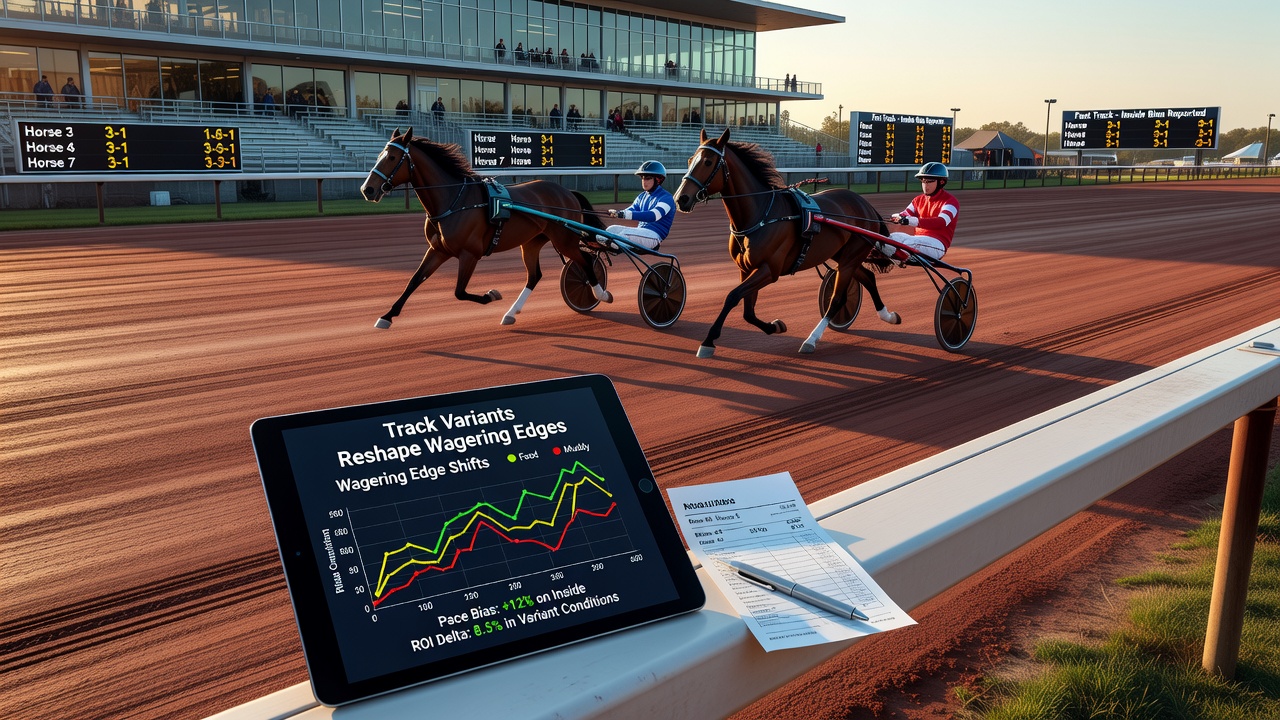
Harness Racing Track Variants and the Evolution of Betting Advantages
Track surfaces in harness racing circuits range from traditional dirt to synthetic materials, and each variant carries measurable effects on race times, horse fatigue rates, and final margins. Observers note that these physical differences create consistent patterns in how favorites perform versus longshots, which in turn shifts the distribution of payouts across win, place, and exacta markets. Data collected from multiple North American and European meets demonstrates that half-mile ovals with tighter turns tend to favor horses with quick early speed, whereas larger mile tracks reward sustained pacing ability over the final quarters.
Physical Characteristics That Define Track Variants
Banking angles, moisture content, and cushion depth combine to alter stride mechanics for both trotters and pacers, while weather events in late spring can transform a fast surface into a sloppy one within hours. Researchers tracking performances across the 2025-2026 season recorded average speed reductions of 1.8 seconds per mile on tracks rated “good” after rainfall compared with “fast” conditions, and those gaps widened further on surfaces lacking modern drainage systems. Circuit operators in regions such as the Midwest and parts of Canada have introduced synthetic blends that maintain more stable coefficients of friction, yet even these materials show measurable seasonal drift when temperatures drop below certain thresholds.
Performance Data Across Circuits in Early 2026
Figures released by the United States Trotting Association for races contested through May 2026 reveal that horses breaking from inside posts on half-mile tracks posted win percentages 3.2 points higher than their counterparts on mile ovals under identical class conditions. The same dataset indicates that drivers adjusted positioning strategies earlier in races when competing on surfaces with pronounced banking, often moving horses toward the outside sooner to avoid traffic congestion created by tighter radii. Bettors monitoring these trends found that morning-line odds frequently underestimated the post-position edge on certain tracks while overestimating it on others, producing recurring value opportunities in exacta and trifecta pools.

Market Adjustments and Wagering Edge Formation
Oddsmakers incorporate historical surface data when setting opening lines, yet live betting markets often react more slowly to real-time track variant changes that occur between races. One study compiled by an Australian racing analytics group found that win-pool percentages shifted by an average of 4.7 points after the first two races on a card once the surface rating moved from fast to wet-fast, creating brief windows where public money had not fully adjusted to the new reality. Those who follow speed-figure adjustments published by independent services noted that horses with proven wet-track form climbed in the rankings faster than tote boards reflected, particularly in events scheduled during June 2026 when afternoon thunderstorms affected several prominent meets.
Regional Differences and Their Cumulative Effects
European circuits that rely more heavily on turf-based or all-weather surfaces produce different variance profiles than North American dirt tracks, and bettors who follow cross-border horses encounter additional layers of complexity when assessing past performances. Data compiled by the European Trotting Union shows that horses transitioning from synthetic European tracks to North American dirt ovals required an average of three starts to reach peak adaptation, during which their finishing times lagged behind established local averages. Such transitions generate measurable discrepancies between morning-line expectations and actual results, especially in stakes events where international contenders appear on the same program as domestic specialists.
Conclusion
Track variants in harness racing continue to supply quantifiable edges for those who track surface conditions alongside post position, driver intent, and class levels. Circuits that publish detailed daily surface reports enable more precise modeling, while meets that lag in transparency leave larger gaps between informed and uninformed wagering. As data collection improves through sensor-equipped sulkies and standardized rating systems, the relationship between physical track characteristics and market outcomes grows clearer, allowing systematic approaches to replace anecdotal observation across major racing jurisdictions.