How Recovery Schedules Shape Multi-Sport Parlay Construction
Written by Zoe Carter · Jun 7, 2026

How Recovery Schedules Shape Multi-Sport Parlay Construction
Recovery schedules in professional sports create measurable effects on player output, and these patterns carry direct implications for multi-sport parlay construction, where bettors combine selections from basketball, soccer, baseball, and other leagues into single wagers. Teams publish injury reports and rest announcements that reveal when star players sit out back-to-back games or long-haul travel series, and those absences alter scoring averages, defensive efficiency, and overall win probabilities across the involved markets.
Core Mechanics of Rest Cycles Across Leagues
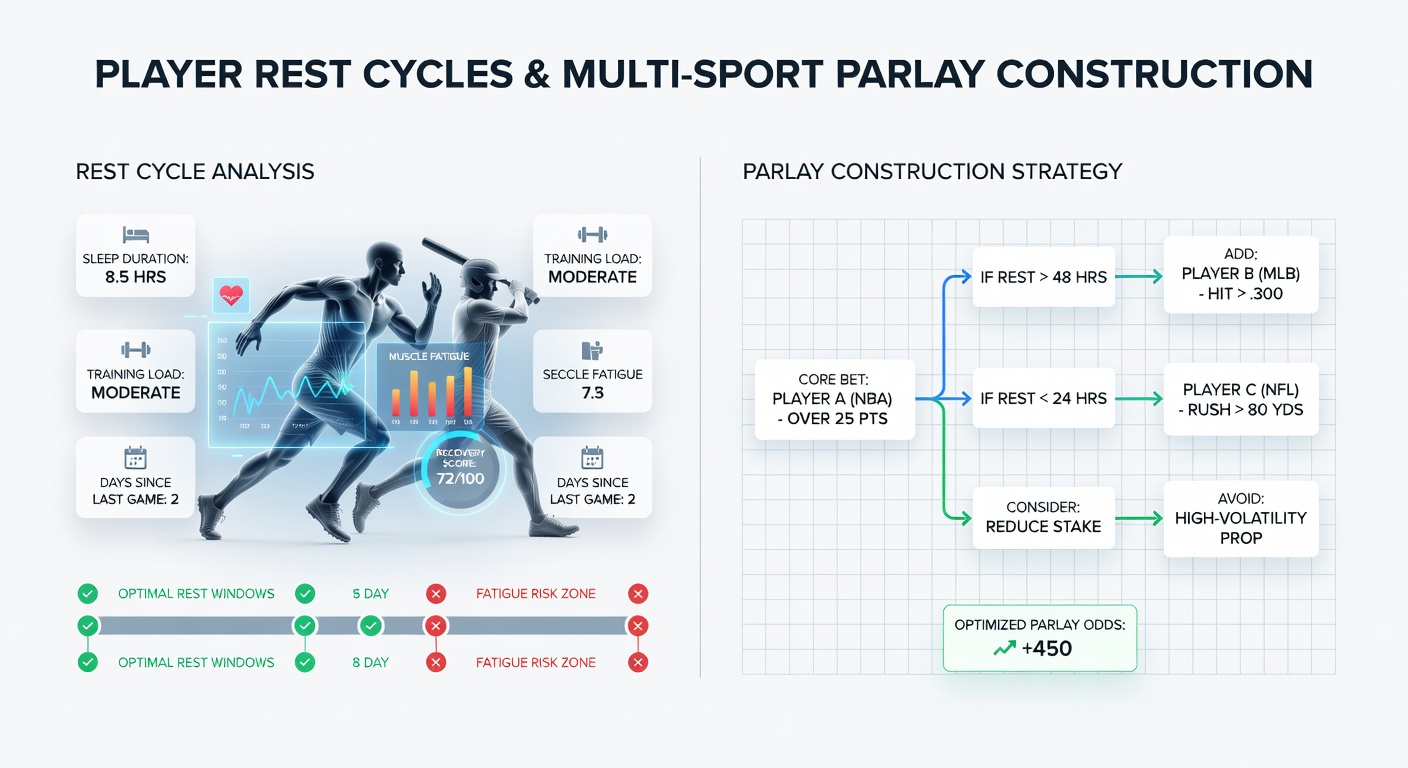
League calendars dictate the frequency of rest opportunities, with the NBA maintaining one of the most documented systems through its load management protocols that spread games over 82 regular-season dates plus playoffs. Data collected by league statisticians shows teams resting multiple starters on the second night of back-to-backs experience a drop in points per game that ranges between 4 and 8 percent compared with fully rested lineups. Soccer leagues in Europe follow different rhythms because domestic cups and continental competitions compress schedules, forcing managers to rotate squads during midweek fixtures before weekend league matches.
Baseball organizations track pitcher rest intervals more precisely than position players, since starting pitchers typically require four or five days between outings. When a team’s ace throws on short rest, earned-run averages rise according to historical pitch-tracking databases maintained by each club. Bettors constructing parlays that cross NBA and MLB lines must therefore align rest windows for basketball wings and baseball starters who appear on the same ticket, because fatigue metrics from one sport do not transfer directly to another yet still influence the combined payout structure.
Cross-League Interactions in Parlay Construction
Multi-sport tickets gain complexity when rest announcements arrive at staggered times. An NBA team resting its frontcourt on a Tuesday night alters the total points line for that game, yet the same information rarely affects a concurrent soccer match unless shared ownership or travel logistics create indirect connections. Observers note that sharp bettors monitor multiple injury feeds simultaneously because a single rested player can shift the implied probability of three or four legs on a single parlay slip.
Research conducted by sports performance labs indicates that travel distance compounds rest deficits, particularly when teams cross time zones between games. In June 2026, several NBA clubs face extended flights immediately after the conference finals conclude, and those schedules overlap with early rounds of international soccer qualifiers. The resulting overlap creates windows where basketball totals and soccer goal lines move in tandem once updated rest reports reach the market.
Data Patterns and Market Adjustments
Betting exchanges record line movements that follow rest disclosures within minutes of official announcements. When a high-usage guard receives a maintenance day, the opposing team’s player props adjust upward while the rested side’s team total drifts downward. Aggregated data from multiple seasons reveals that parlays mixing NBA player props with MLB run totals show reduced correlation once rest variables enter the model, allowing constructors to diversify risk rather than compound it.
Academic analyses published through sports science departments at North American universities demonstrate that cumulative fatigue across a seven-day window produces statistically significant declines in shooting percentages and sprint distances. Those same studies note that soccer midfielders exhibit similar drops after three matches in eight days. Parlay builders therefore compare rest density charts from different leagues before finalizing selections, because overlapping high-fatigue periods can either inflate or suppress combined odds depending on which sides receive the breaks.
Practical Application in Current Markets
During the 2026 calendar, operators release updated rest projections each morning that feed directly into pricing engines. Bettors who incorporate these projections into multi-sport tickets adjust their leg counts and stake sizes accordingly. Government reports from Canadian provincial regulators and industry summaries issued by Australian wagering associations both highlight increased handle on cross-sport products when rest information becomes transparent earlier in the week.
One documented case involved a series of NBA-Soccer parlays in late May where multiple Eastern Conference teams rested veterans ahead of playoff travel; the corresponding soccer markets saw correlated shifts in under totals once the basketball data circulated through shared analytics platforms. Constructors who tracked both sets of announcements captured edges before lines stabilized.
Conclusion
Rest cycles function as quantifiable inputs that reshape probability distributions in every sport they touch, and their influence extends across parlay boundaries when bettors combine selections from separate leagues. Accurate tracking of published schedules, travel logs, and load-management trends supplies the factual foundation for constructing those tickets, while ongoing data releases from league offices and independent performance researchers continue to refine the models used in this segment of the market.