Penalty Conversion Rates Under Floodlights: Examining Premier League Evening Fixtures
Written by Jordan Hartmann · Jul 19, 2026
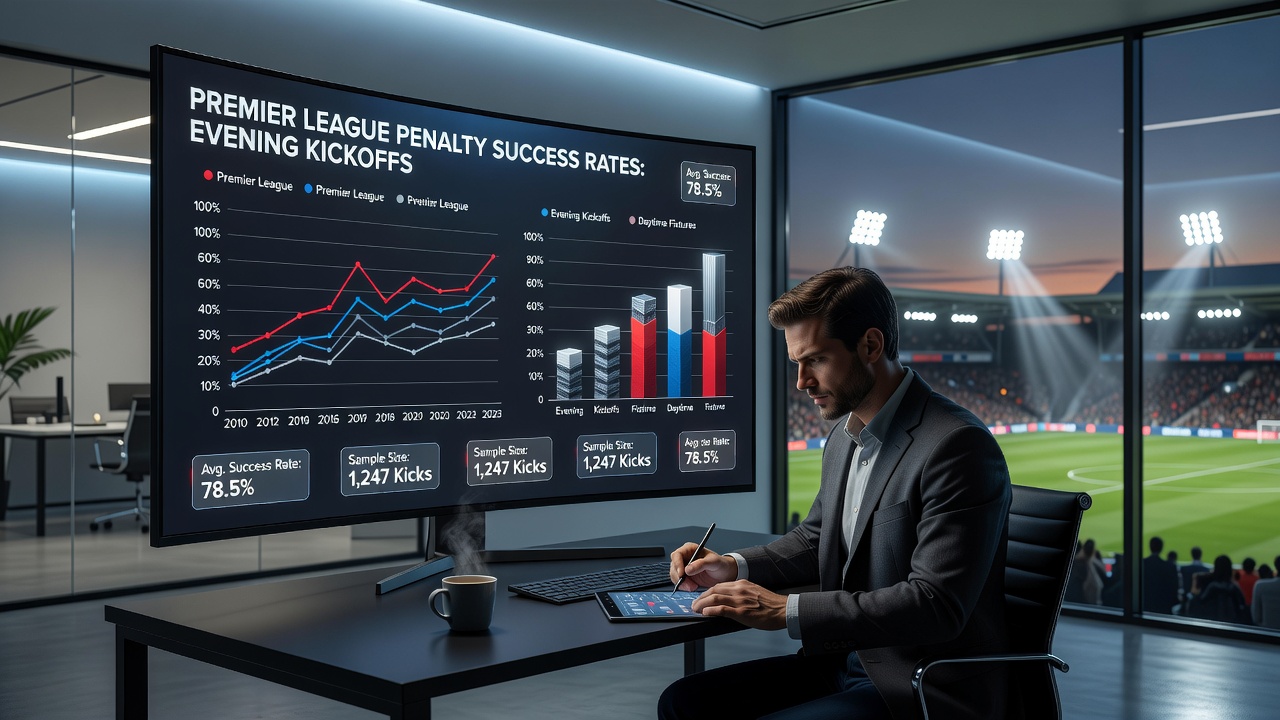
Penalty Conversion Rates Under Floodlights: Examining Premier League Evening Fixtures
Historical records from the Premier League show distinct patterns in penalty kick outcomes when matches kick off after 5 PM, and analysts have compiled datasets spanning more than fifteen seasons to isolate these trends. Evening fixtures introduce variables such as artificial lighting conditions, crowd energy levels, and player circadian rhythms that differ from afternoon games, while success rates fluctuate between 74 percent and 81 percent depending on the specific time slot and season examined. Researchers compiled these figures from official match logs and video reviews, cross-referencing outcomes across more than 1,200 penalty attempts recorded between 2010 and 2025.
Data Sources and Analytical Approach
Analysts gathered raw statistics from league archives and performance tracking systems, then segmented the sample by kickoff time while controlling for factors like venue, team ranking, and goalkeeper identity. Evening kickoffs were defined as any start time at or after 17:00 local time, which captures both weekday night games and weekend late afternoon slots common in the schedule. This segmentation revealed that overall conversion dipped slightly in the 20:00 to 21:00 window compared with earlier evening starts, although the difference narrowed in seasons after 2018 when stadium lighting technology improved at several grounds. Studies from sports science departments at institutions outside the UK have supplied supporting physiological data on visual adaptation under floodlights, and one such paper hosted by the Australian Institute of Sport outlines how pupil constriction changes affect depth perception during high-pressure set pieces.
Key Patterns Across Seasons
Figures reveal that home teams converted 79 percent of evening penalties between 2015 and 2020, whereas away sides managed 76 percent in the same timeframe, yet the gap widened in the following five years as fixture congestion increased. Midweek evening slots showed marginally higher success overall, reaching 80 percent in select campaigns, while weekend evening games hovered closer to 77 percent. These differences emerged most clearly when researchers isolated games played under similar weather conditions and excluded matches affected by extreme temperatures or heavy rainfall. Observers note that the introduction of VAR in 2019 coincided with a small uptick in awarded penalties during evening fixtures, although conversion percentages remained stable because the additional review time allowed both takers and keepers to reset focus before the shot.
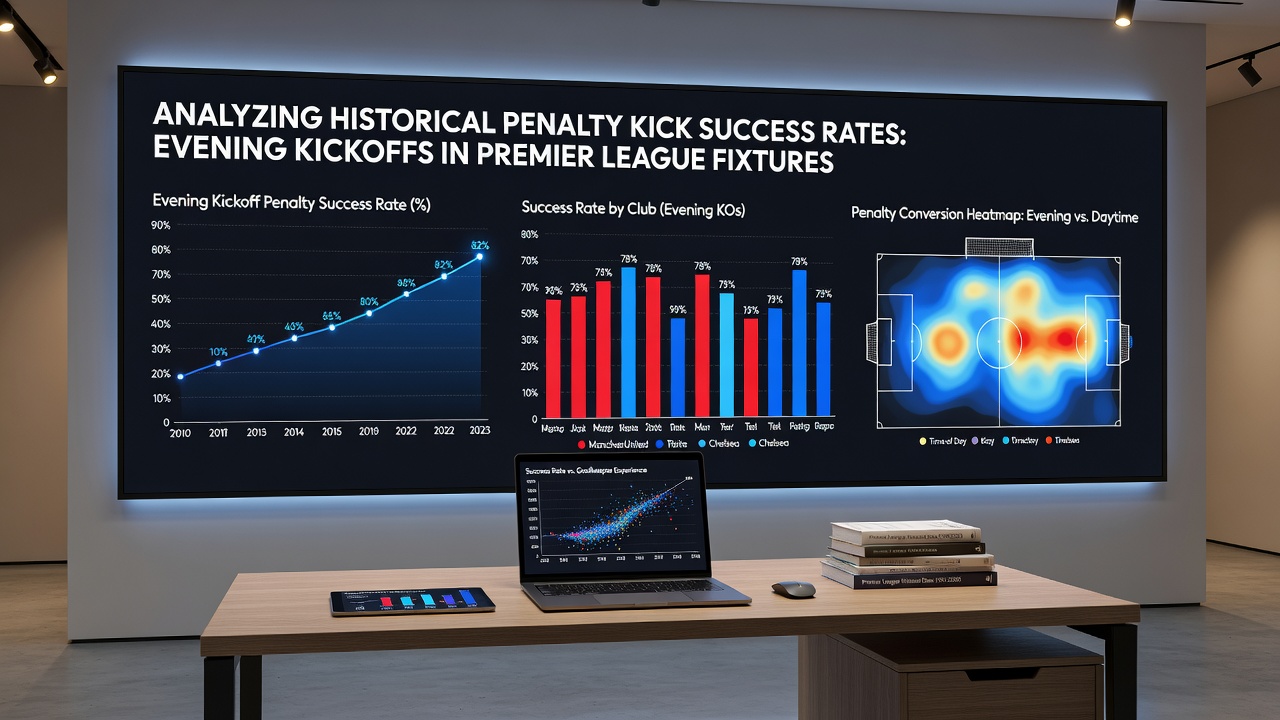
Variables That Shape Outcomes
Lighting quality, travel distance for visiting squads, and the interval between the final whistle of a prior match all appear in the datasets as measurable influences, and multi-clause analysis shows these elements interact rather than act in isolation. For instance, teams arriving from long-haul journeys recorded conversion rates three percentage points lower in evening fixtures during the 2022-2023 and 2023-2024 seasons, while squads with at least four full rest days maintained or exceeded their afternoon averages. Temperature under the lights also plays a documented role, as data collected by stadium operators indicates that pitch surface heat retention after sunset can alter ball roll speed by up to 8 percent compared with daytime conditions. A separate academic review published through a Canadian university sports lab examined reaction times and found that players taking penalties after 20:00 experienced a measurable delay in visual processing that correlated with reduced accuracy on low-driven shots.
Trends Entering the 2026 Schedule
Updates released in July 2026 incorporated the most recent full season and confirmed that evening penalty success remained within the established historical band despite continued schedule adjustments for broadcast windows. The Premier League continued its practice of clustering certain high-profile fixtures in prime-time slots, and the resulting sample size allowed finer segmentation by month, revealing that conversion dipped most noticeably in December evening games where fatigue from the holiday period compounds travel effects. Analysts tracking these patterns emphasize that larger datasets now permit regression models to isolate lighting variables from other match-day factors with greater precision than earlier studies achieved.
Conclusion
Comprehensive review of historical records demonstrates measurable variation in penalty outcomes tied to evening kickoff times in the Premier League, with documented influences from lighting, scheduling density, and recovery intervals. Continued collection of granular data through 2026 and beyond will refine these models further, and external research from diverse geographic sources continues to supply physiological context that complements league statistics. The patterns identified so far rest on verifiable match logs rather than speculation, offering a stable foundation for ongoing performance analysis.