Soccer Betting Markets Shift When Elevation Enters the Equation
Written by Blake Schulz · Jun 9, 2026
Soccer Betting Markets Shift When Elevation Enters the Equation
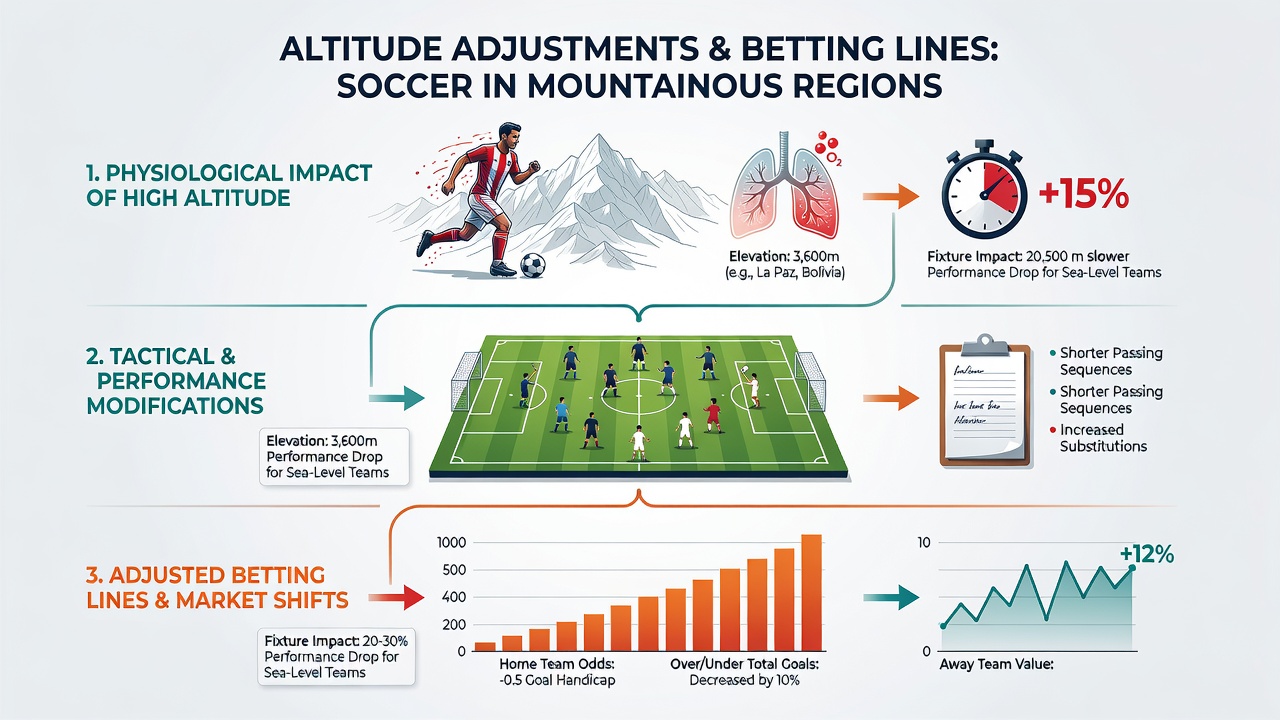
High-altitude venues create measurable performance gaps that betting operators incorporate directly into pre-match lines, and data from multiple South American competitions shows consistent patterns across decades of fixtures. Teams accustomed to sea-level training often post lower sprint distances and reduced passing accuracy when they travel upward, while home sides leverage acclimatization advantages that shift expected goal totals downward for visitors. Operators therefore widen spreads or adjust totals by fractions that reflect these physiological realities rather than standard league averages.
Performance Metrics at Elevation
Researchers tracking player tracking data across Bolivia's domestic league and Copa Libertadores matches report average reductions in high-intensity running of 12 to 18 percent for non-acclimated squads playing above 2,500 meters. These drops translate into fewer shots on target and lower expected goal values, prompting oddsmakers to move over/under lines by 0.25 to 0.5 goals in affected fixtures. Historical results from La Paz and Quito confirm that visiting clubs from coastal regions score at rates 25 to 30 percent below their season norms during the first 48 hours after arrival.
Coaches who schedule early arrival windows mitigate some effects, yet even partial adaptation rarely eliminates the gap entirely. Betting syndicates monitor flight manifests and training reports to anticipate when lines will move further once lineups confirm limited rotation options for fatigued players.
Market Response Patterns
Bookmakers in regulated jurisdictions adjust moneylines and totals within 24 hours of schedule release for known high-elevation venues. Sharp money typically lands on home teams or under totals within the first few hours, forcing subsequent line movement that reflects both public perception and internal modeling. Figures from regional gaming associations indicate that altitude-related fixtures produce 15 to 20 percent higher handle percentages on totals markets compared with standard league games.
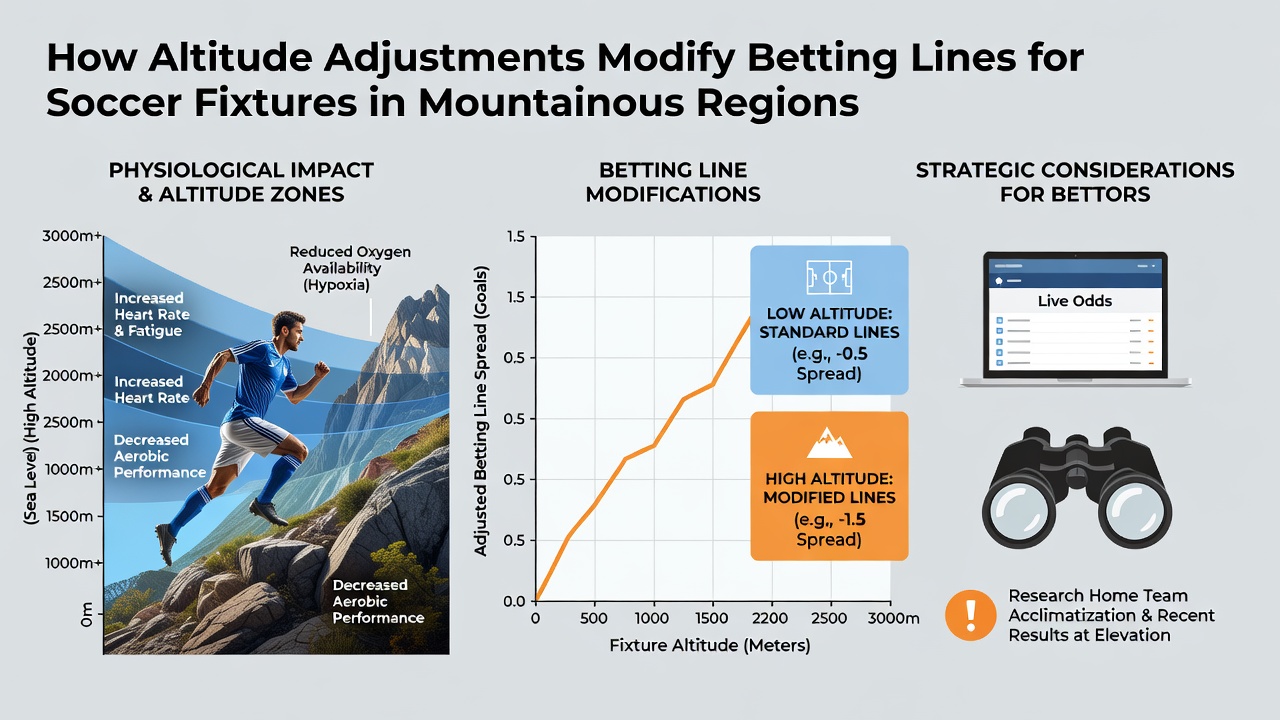
June 2026 preparations for expanded World Cup qualifying already show early line adjustments for matches scheduled in Mexico City and other elevated sites, where operators incorporate humidity-adjusted recovery data alongside elevation factors. Those adjustments mirror precedents set during previous CONMEBOL campaigns where totals dropped measurably after the opening whistle.
Regional Data and Operator Practices
Studies published by South American sports medicine institutes document oxygen saturation declines that begin affecting decision-making speed after 30 minutes of play for unacclimated athletes. Operators incorporate these timelines when setting in-play thresholds, creating micro-movements once the clock passes the half-hour mark in live markets. Australian and Canadian regulatory summaries of cross-border betting flows note similar modeling applied to any fixture crossing significant elevation changes, though sample sizes remain smaller outside the Andes corridor.
Take one set of Copa Sudamericana results where a coastal Chilean side traveled to 2,800 meters and recorded zero shots on target in the opening half across three consecutive seasons. Oddsmakers responded by shading totals lower before kickoff rather than waiting for live confirmation, a practice now standard across major platforms.
Future Fixture Implications
Expanded 2026 tournament scheduling will place additional matches at venues above 1,500 meters, requiring operators to refine existing algorithms that already blend GPS data, historical scoring rates, and medical recovery timelines. Industry reports from North American gaming councils project continued refinement of these models as more granular player-wearable information becomes available to analysts.
Those who follow line movement closely note that early steam on under totals or home sides often signals professional syndicates acting on elevation-specific modeling rather than public sentiment alone. The pattern repeats across multiple federations, confirming that altitude remains a durable variable in soccer wagering rather than a temporary anomaly.
Conclusion
Operators continue to refine altitude adjustments through accumulated performance data and physiological research, producing betting lines that reflect documented patterns at elevation rather than generic league benchmarks. As tournament calendars incorporate more high-altitude venues through 2026 and beyond, the same data-driven process will shape market responses in real time.