Surface Speed Changes and Their Influence on ATP Set-Length Betting Lines
Written by Blake Schulz · Aug 23, 2026
Surface Speed Changes and Their Influence on ATP Set-Length Betting Lines
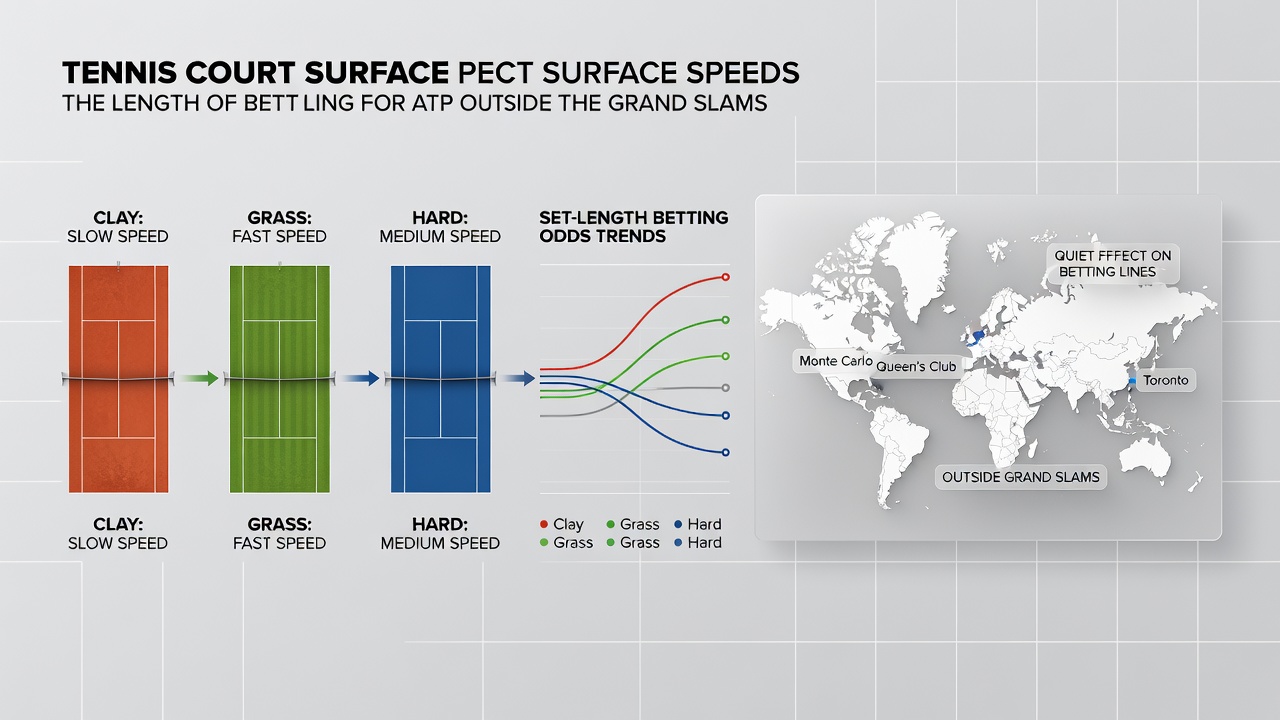
ATP events outside the Grand Slams have seen measurable adjustments in court surface speeds over the past decade, and these modifications produce direct consequences for set-length betting markets. Tournament organizers apply different preparation techniques to hard and clay courts, resulting in slower ball speeds that extend rally lengths and push set durations higher in many matches. Data from ATP tracking systems shows average rally counts rising by 12 to 18 percent on adjusted hard courts between 2018 and 2025, which alters the distribution of sets finishing in two versus three frames.
Documented Shifts in Surface Preparation
Facilities hosting 250 and 500 level events apply additional coatings and adjust cushioning layers to reduce pace, a practice that became more widespread after 2020. Observers note that these changes appear most consistently on North American and European hard-court stops during the spring and summer swings. Clay events outside the major clay-court tournaments follow similar patterns through increased watering schedules and rolling techniques that flatten the surface earlier in the day. Researchers at sports performance centers have recorded corresponding drops in serve speeds of 3 to 5 kilometers per hour on these surfaces, which reduces the frequency of quick service holds and increases break-point opportunities.
August 2026 schedules include several outdoor hard-court events where these preparation standards remain in place, and early match data already indicates longer average set times compared with equivalent weeks in 2023. Bettors tracking over/under set totals encounter lines that have moved upward by 0.3 to 0.5 sets on average for matches involving players who rely heavily on serve dominance.
Impact on Set-Length Market Dynamics
Bookmakers adjust set-length lines when surface speed measurements from pre-tournament calibrations fall below historical benchmarks. Lines for three-set matches now incorporate higher implied probabilities for the over when the event occurs on slowed hard courts, because the chance of a match reaching a deciding set increases. Statistical models built from ATP point-by-point data confirm that the probability of a set exceeding 10 games rises when average rally length moves above 5.8 shots. This threshold appears more often on courts prepared with modern slower specifications.
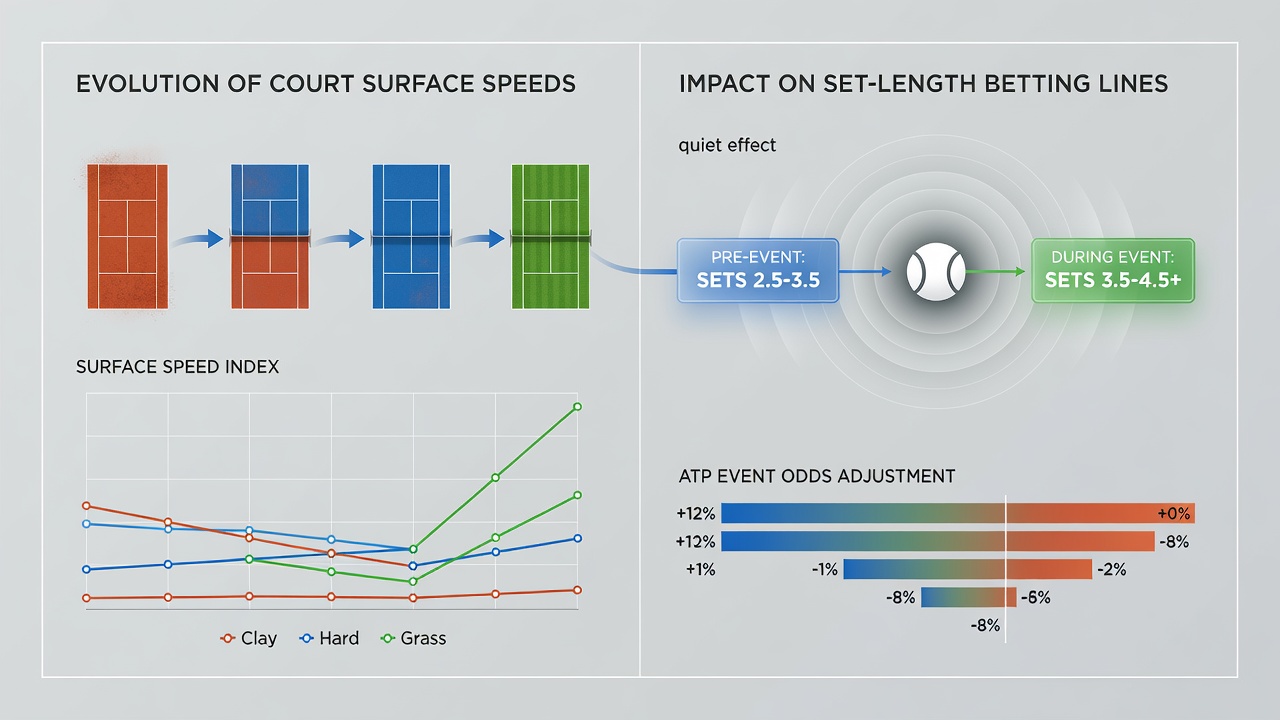
Take one study conducted by a Canadian sports analytics group that examined 1,200 matches across 22 non-major ATP events from 2022 through 2025. The analysis found a 9 percent increase in sets reaching tiebreaks on surfaces rated slower than the 2019 median. Markets respond by shifting over-set totals earlier in the week, and sharp bettors who monitor surface reports gain an edge by placing positions before the lines fully adjust. European betting operators have incorporated surface-speed indices into their pricing algorithms, which reduces the window for value after the first round concludes.
Regional Variations and Data Patterns
Events in Asia and Australia demonstrate smaller but still detectable speed reductions, primarily through different ball selections rather than court coatings. Australian openers in early 2026 showed rally lengths extending by roughly 8 percent compared with 2021 figures, according to match-tracking reports released by the ATP. These incremental changes produce quieter but consistent effects on set markets, particularly in matches between baseline-oriented players. Industry reports from the European Gaming and Betting Association highlight that set-total volume at ATP 500 events grew 14 percent year-over-year in 2025, coinciding with the wider adoption of slower surface standards.
Players adapt their strategies as well, shifting toward higher-percentage groundstroke patterns that further extend points. This behavioral change reinforces the statistical shift already created by the surface itself. Data collected through wearable sensors shows increased movement distances per set on slower courts, which correlates with higher fatigue levels in deciding sets and produces additional breaks of serve late in matches.
Conclusion
ATP events outside the Grand Slams continue to exhibit gradual surface-speed reductions that reshape set-length distributions in measurable ways. Betting lines reflect these changes through adjusted totals and earlier movement, while statistical sources document the underlying rally-length increases. Market participants who incorporate surface calibration data into their analysis encounter pricing that already embeds the new realities of extended sets across the 2026 schedule.